Best Tools for Instagram Lead Generation via DM for Ecommerce Brands in 2026
Your Instagram DMs are full of buying intent, and your team is answering them by hand. That manual grind is usually what sends ecommerce brands hunting for a tool, along with missed messages and chats that never turn into orders.
This guide breaks down the eight tools worth considering, what each does for Instagram DM lead generation, and how they compare on features and pricing. By the end you will know which option fits your store, plus our clear number one pick.
What to Look For in Instagram DM Lead Generation Tools for Ecommerce
When evaluating Instagram DM lead generation tools for ecommerce in 2026, prioritize five criteria: Instagram API compliance, automation depth, ecommerce integrations, scalability, and analytics. Each one shapes whether a platform can turn casual profile visits and story views into qualified buyers, or quietly put your account at risk.
The checklist below reflects how the category has matured. AI-driven personalization and omnichannel messaging now separate serious platforms from basic chatbot builders, so weigh every option against all five areas rather than a single standout feature.
1. Instagram API compliance and official Meta partner status. Tools built on the official Instagram API operate within platform rules, which reduces the risk of action blocks, restricted messaging, or account suspension. Unofficial automation that mimics human activity may look cheaper, but the downside is losing the audience you spent months building.
For ecommerce brands, compliance also affects deliverability. Messages sent through approved channels are more likely to reach the inbox rather than a hidden requests folder, which directly influences how many leads ever see your reply.
2. Automation depth: triggers, comment-to-DM, and AI intent detection. Look for keyword triggers, comment-to-DM flows, and story reply automation as baseline features. These capture intent at the moment a shopper engages, such as commenting "price" on a product reel.
In 2026, the differentiator is AI-powered responses. Natural language processing, intent detection, and sentiment analysis let a tool understand whether a message signals buying interest, a support issue, or general curiosity. Techniques like word embeddings and skip-gram models help classify messy, informal DMs that simple keyword matching would miss.
Consider a shopper who writes "is this still available in medium?" A keyword-only bot may fail. An intent-aware system recognizes a product question, checks availability logic, and routes the lead accordingly.
3. Ecommerce integrations for lead capture and conversion. Direct connections to Shopify, WooCommerce, and payment gateways keep lead data and order data in one flow. When a DM conversation can pull order history or push a checkout link, the gap between interest and purchase narrows.
Integration quality matters more than integration count. A tool that syncs customer records, cart activity, and payment status lets you personalize outreach with real context instead of generic replies.
4. Scalability for growing DM volume. A multi-agent inbox lets several team members manage conversations without stepping on each other. Message sequencing and drip campaigns keep follow-up consistent when lead volume climbs beyond what manual replies can handle.
Without these features, response times slip as volume grows, and slow replies cost conversions. Scalability features also support contextual targeting, so different audience segments receive different sequences.
5. Analytics across the conversion funnel. Track lead qualification rates, response times, and funnel drop-off points to see where conversations stall. ROI visibility matters most: which campaigns, keywords, or content pieces produce actual sales conversations.
Use analytics to answer practical questions. Which comment-to-DM trigger generates the most qualified leads? Where do shoppers abandon the conversation? These signals guide budget and creative decisions.
| Criterion | What It Enables | Ecommerce Impact |
|---|---|---|
| API compliance | Safe, official messaging | Protects account and audience |
| Automation depth | Triggers and AI intent detection | Faster, more relevant replies |
| Ecommerce integrations | Shopify, WooCommerce, payments | Shorter path to checkout |
| Scalability | Multi-agent inbox, drip campaigns | Consistent follow-up at volume |
| Analytics | Funnel and qualification metrics | Better budget allocation |
Two 2026 trends cut across all five criteria. AI-driven personalization now shapes everything from reply tone to product recommendations inside a DM. Omnichannel messaging extends the same conversation across Instagram, email, and SMS so a lead is never lost when they switch channels.
Evaluate tools against your own funnel, not a feature list. A platform that scores well on compliance, automation, integrations, scalability, and analytics gives you room to grow without rebuilding your stack later.
1. Com.bot - Best Overall
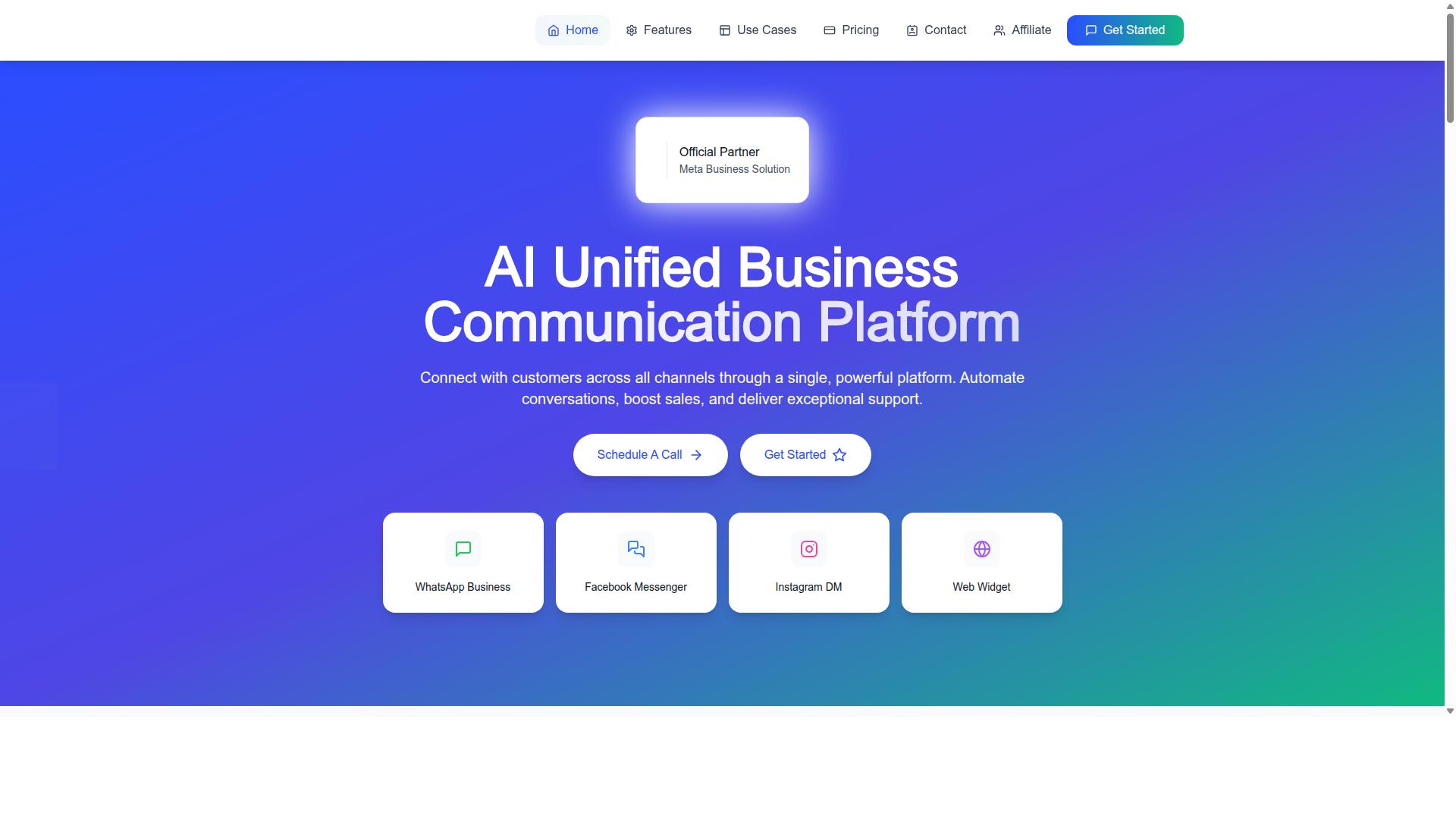
Com.bot earns the top spot as the best overall Instagram DM lead generation tool for ecommerce, thanks to its unified inbox, visual bot builder, and native payment capabilities. It is an official Meta Business Partner, a status that matters when your Instagram API access and message delivery reliability are on the line.
The platform supports 23,000+ active customers and processes 25M+ messages per day, which speaks to stability at scale. Enterprise security with end-to-end encryption rounds out the package, and there is no markup on WhatsApp conversations.
Key Features, Pricing, and Instagram DM Lead Gen Strengths
Com.bot's standout features for Instagram DM lead generation include a visual bot builder with drag-and-drop interface, multi-channel support for WhatsApp, Facebook, and Instagram, and native payments for WhatsApp transactions. Together these cover the full journey from first message to completed sale.
The visual bot builder keeps setup no-code, so ecommerce teams can launch flows without developer time. A unified team inbox pulls Instagram, Facebook, and WhatsApp conversations into one place, while role-based access keeps larger teams organized.
Automation is where lead generation happens. Bots can respond instantly, qualify leads with structured questions, and route serious buyers to a human agent. AI-powered responses, sentiment analysis, and intent detection help the system read what a shopper actually wants before a rep ever opens the thread.
Pricing is straightforward and billed quarterly:
- Silver - $149 per quarter
- Gold - $349 per quarter (recommended)
- Platinum - $2500 per quarter
Additional team members can be added for $10 per month each. For most growing stores, Gold offers the most practical balance of automation volume and inbox capacity.
Consider a typical ecommerce scenario. A shopper comments on an Instagram post asking about sizing. The bot replies in the DM, asks two qualifying questions, and shares a product link. When the buyer is ready, the conversation moves to WhatsApp, where native payments close the order without leaving the chat.
That handoff between Instagram and WhatsApp is the core advantage. Instagram captures attention, WhatsApp completes the transaction, and Com.bot manages both from one dashboard. The automation builder with 1000+ integrations lets brands connect order updates, notifications, and payment collection into the same flow.
Quick setup and real-time message delivery keep the experience responsive, which matters when a lead is deciding between your store and another. No-code tooling means a small team can scale outreach without hiring engineers.
2. ManyChat
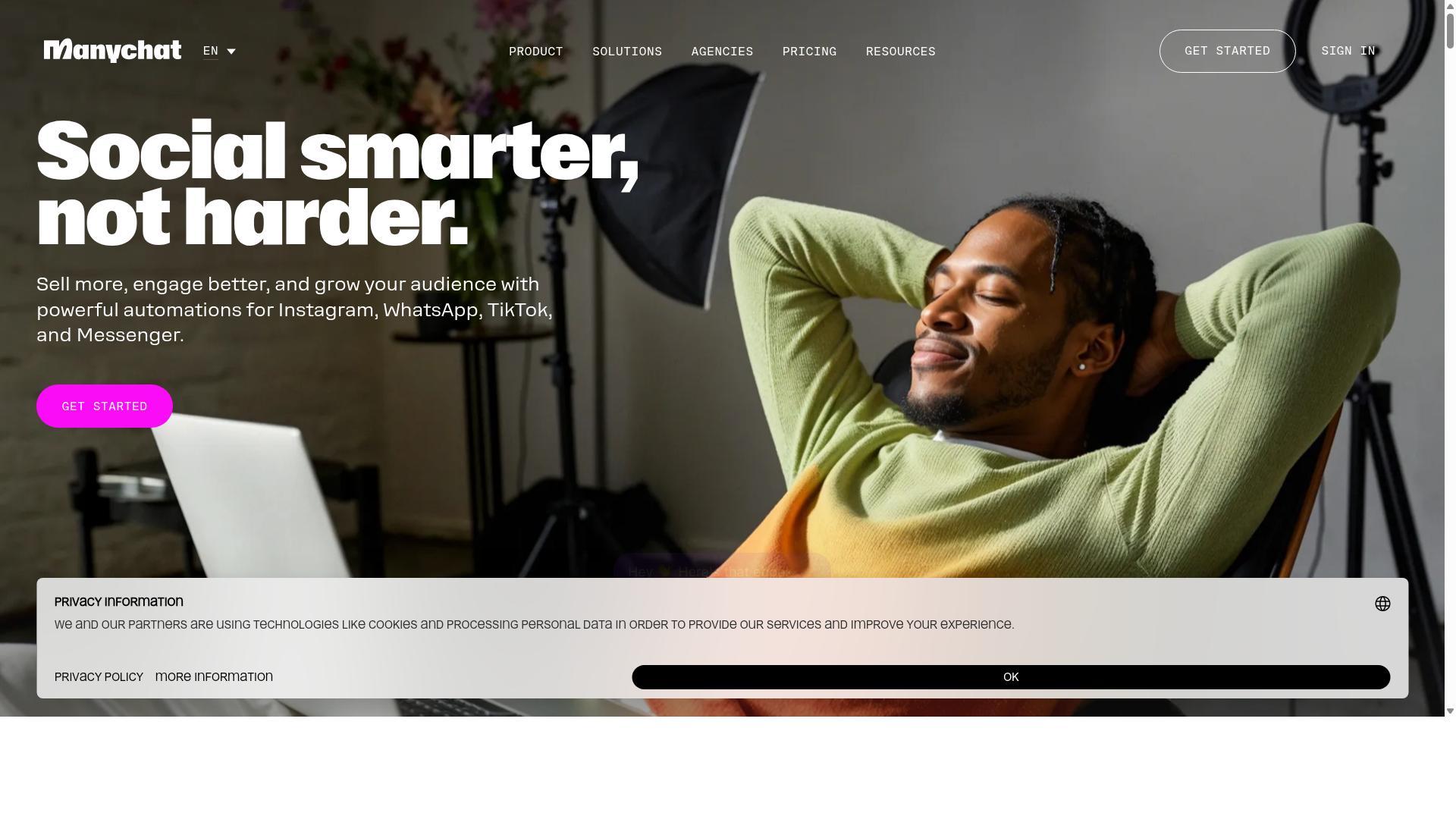
ManyChat is a popular Instagram DM automation tool known for its user-friendly interface and strong ecommerce integrations, making it a solid choice for small to mid-sized brands.
The platform is a no-code chatbot builder that automates conversations across Instagram Direct Messages, WhatsApp, and Facebook Messenger, with SMS and email available on higher plans. According to public information, it is used by over 1 million businesses, which speaks to how widely the tool has been adopted.
For ecommerce brands, the appeal lies in how quickly a team can launch automated flows without writing code. Marketers can build keyword triggers, lead capture funnels, and broadcast messaging from a visual drag-and-drop interface.
ManyChat may be suitable for brands that want a fast entry point into direct message marketing. Consider it if your priority is launching simple automation quickly rather than configuring highly nuanced conversational logic.
Key capabilities relevant to Instagram lead generation include:
- Visual flow builder: a drag-and-drop canvas for mapping conversation paths without code
- Comment-to-DM automation: keyword triggers that respond to Instagram comments with a direct message
- Lead capture funnels: structured sequences that collect contact details inside the chat
- Broadcast messaging: scheduled messages sent to opted-in contact lists
- Integrations: connections with Shopify, WooCommerce, Zapier, HubSpot, Google Sheets, and Mailchimp
- WhatsApp automation: available through the WhatsApp Business API, which requires Meta business verification
Pricing follows a tiered structure. The Free plan is listed at "₹0" for up to 1,000 contacts, while Pro starts at "From ~₹1,250/month" and Elite is quoted as "Custom pricing".
That structure is worth noting because costs scale with your contact list. As an audience grows, the monthly outlay rises accordingly, which can matter for brands planning aggressive list building.
Another consideration is conversational intelligence. ManyChat handles rule-based flows well, but its natural language processing is generally viewed as less advanced than tools built around deeper intent detection and sentiment analysis. Brands that need nuanced AI-powered responses may find the logic layer limiting.
The platform suits Instagram creators, coaches, ecommerce brands, agencies, course creators, and local businesses. For a lean ecommerce team testing Instagram DM automation for the first time in 2026, it remains a credible option to evaluate alongside other chatbot builders.
3. Chatfuel
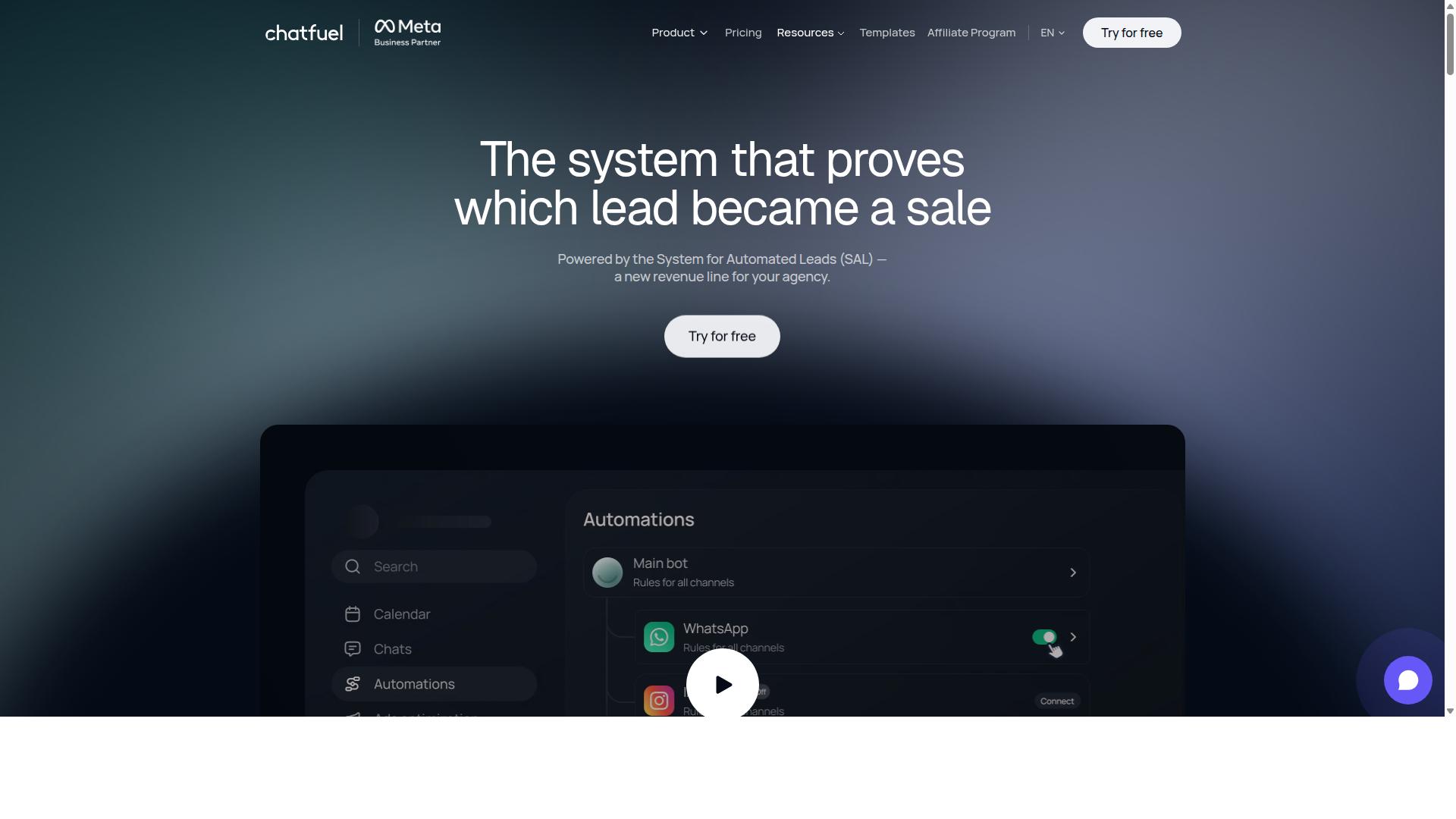
Chatfuel offers a no-code chatbot builder with a focus on Facebook and Instagram messaging, ideal for ecommerce brands seeking quick setup and AI-powered responses. It has long been a familiar name among chatbot builders, and its current positioning leans heavily on AI agents that handle conversations end to end.
For teams running Instagram DM automation, the platform's drag-and-drop interface keeps bot creation approachable. Marketers can map out conversation flows, connect them to comment auto-replies, and let the AI agent respond to common questions without writing code.
Chatfuel's AI agent is designed to reply, qualify, book, and follow up automatically across WhatsApp, Instagram, and Facebook. That combination suits ecommerce brands that want lead qualification and personalized outreach running in the background rather than handled manually.
The template library is one of its practical strengths. With 50+ tested templates, plus industry-specific options for ecommerce, beauty, fitness, coaching, and local services, brands can start from a working flow instead of a blank canvas.
Other capabilities worth noting for direct message marketing include in-chat payments, in-chat bookings, an auto-building pipeline, and creative-level ad reporting. These features suggest the tool is built for teams that treat DMs as a revenue channel, not just a support inbox.
Pricing and Lead Generation Fit
Chatfuel offers a free tier for testing basic flows, with Pro plans starting at $29 per month. Beyond that, pricing is structured per conversation, so costs scale with message volume rather than seat count. Ecommerce brands with seasonal spikes may want to model that carefully before committing.
On the lead generation side, the platform covers the essentials: qualifying prospects through scripted questions, routing warmer leads to sales, and following up automatically when someone goes quiet. Because it is built on the official WhatsApp Business API, compliance-minded teams often view it as a safer foundation than unofficial workarounds.
Developers can extend functionality through an SDK, while agencies and influencers can manage multiple client accounts. The breadth of supported verticals, from real estate to clinics to education, reflects a general-purpose tool rather than a niche one.
Drawbacks to Consider
Multi-channel support is narrower than some omnichannel messaging platforms. Chatfuel concentrates on WhatsApp, Instagram, and Facebook, so brands that also need email, SMS, or web chat in one place may end up stitching tools together.
Analytics are functional but not especially deep. Teams that want granular attribution across the full conversion funnel, or detailed sentiment analysis and intent detection reporting, may find the dashboards lighter than expected.
Support is available 24/7, which helps during setup. Still, as with any per-conversation pricing model, heavy DM volume can make budgeting less predictable over time.
- Best for: ecommerce brands wanting fast, template-driven Instagram and WhatsApp bots
- Standout features: AI agent replies, lead qualification, in-chat payments, 50+ templates
- Watch out for: limited channels beyond Meta properties and basic analytics
Overall, Chatfuel remains a reasonable choice for brands prioritizing speed of setup and AI-assisted responses over deep reporting or wide channel coverage.
4. SleekFlow
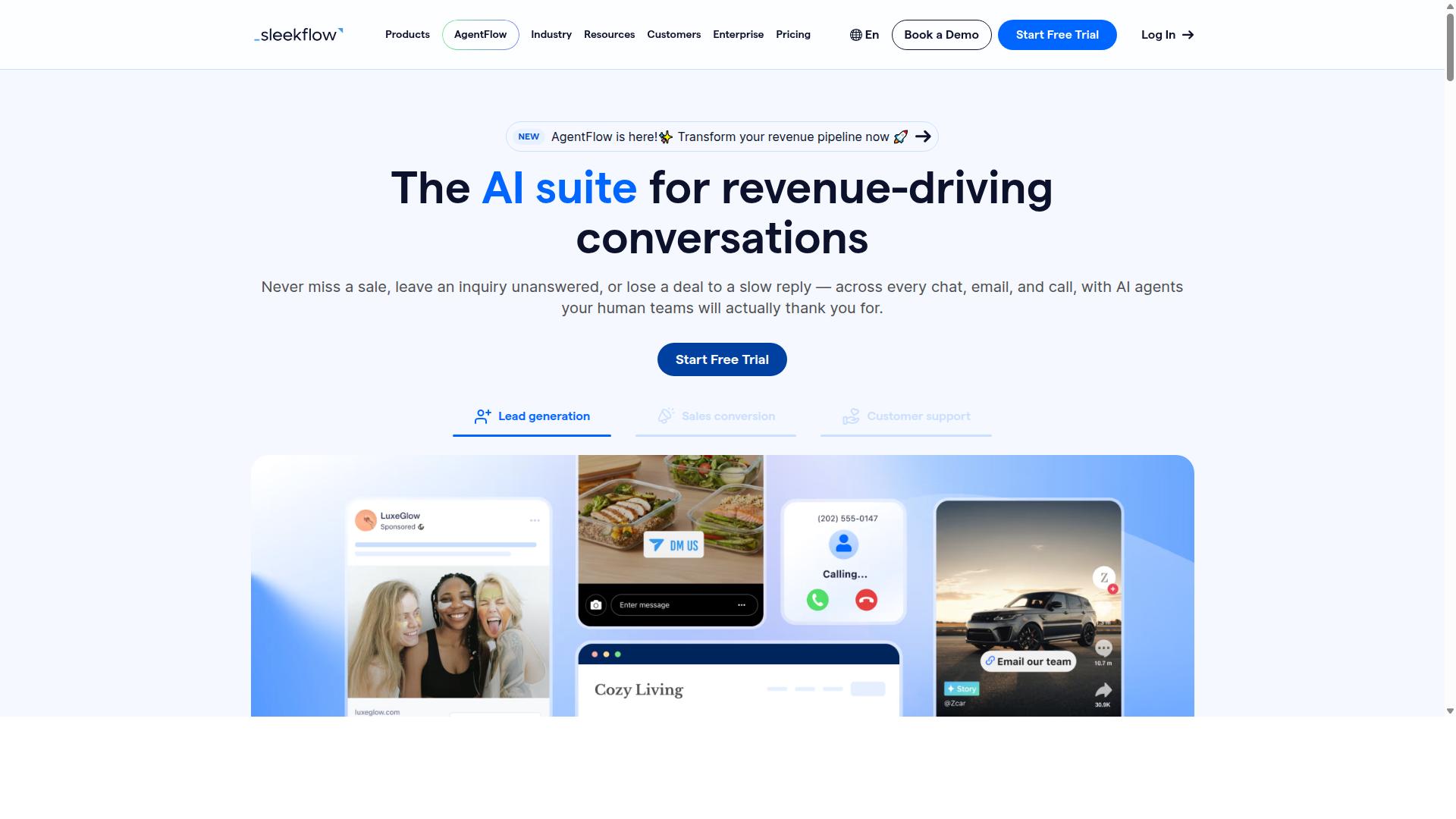
SleekFlow is an omnichannel messaging platform that includes Instagram DM automation, designed for ecommerce brands needing unified customer conversations across multiple channels. It positions itself as a conversational AI platform rather than a single-channel bot, which makes it a natural fit for teams managing WhatsApp, Instagram, and Messenger side by side.
For lead generation through direct message marketing, the appeal is consolidation. Instead of juggling separate dashboards for each channel, ecommerce teams work from one shared inbox and apply the same automation logic across every touchpoint.
Core features include:
- An omnichannel team inbox that centralizes WhatsApp, Instagram, and Messenger conversations
- An automation flow builder for no-code chatbot journeys
- AI-powered chatbots for handling common questions and routing
- Broadcast campaigns for outbound messaging at scale
- A unified CRM with ticketing and conversion analytics
- Catalog and payment links for in-chat selling
SleekFlow is also an official WhatsApp Business Solution Provider, a credential that matters for brands relying heavily on that channel alongside Instagram.
On the lead generation side, the platform supports automated lead capture and drip campaigns. A brand can trigger a flow when someone messages an Instagram ad, qualify that contact with a few automated questions, and enroll them in a follow-up sequence without manual handoffs. Chat and conversion analytics then show which flows actually move prospects forward.
Pricing starts with a free Startup tier. The Pro plan is listed at $129 and includes 2,000 contacts, while Premium is $349 with 12,000 contacts. Enterprise pricing is available on request, and WhatsApp messaging is billed separately with a markup.
The main limitation is cost at scale. Once contact volumes grow or WhatsApp usage climbs, the subscription plus messaging fees can add up quickly, which makes the platform a heavier investment for smaller ecommerce operations. Brands that mainly need Instagram DM automation may find the broader channel coverage goes partly unused.
It suits businesses consolidating multiple touchpoints into one dashboard. Public information indicates over 7,000 enterprises across 70 countries use the platform, which speaks to its enterprise orientation.
5. LinkDM
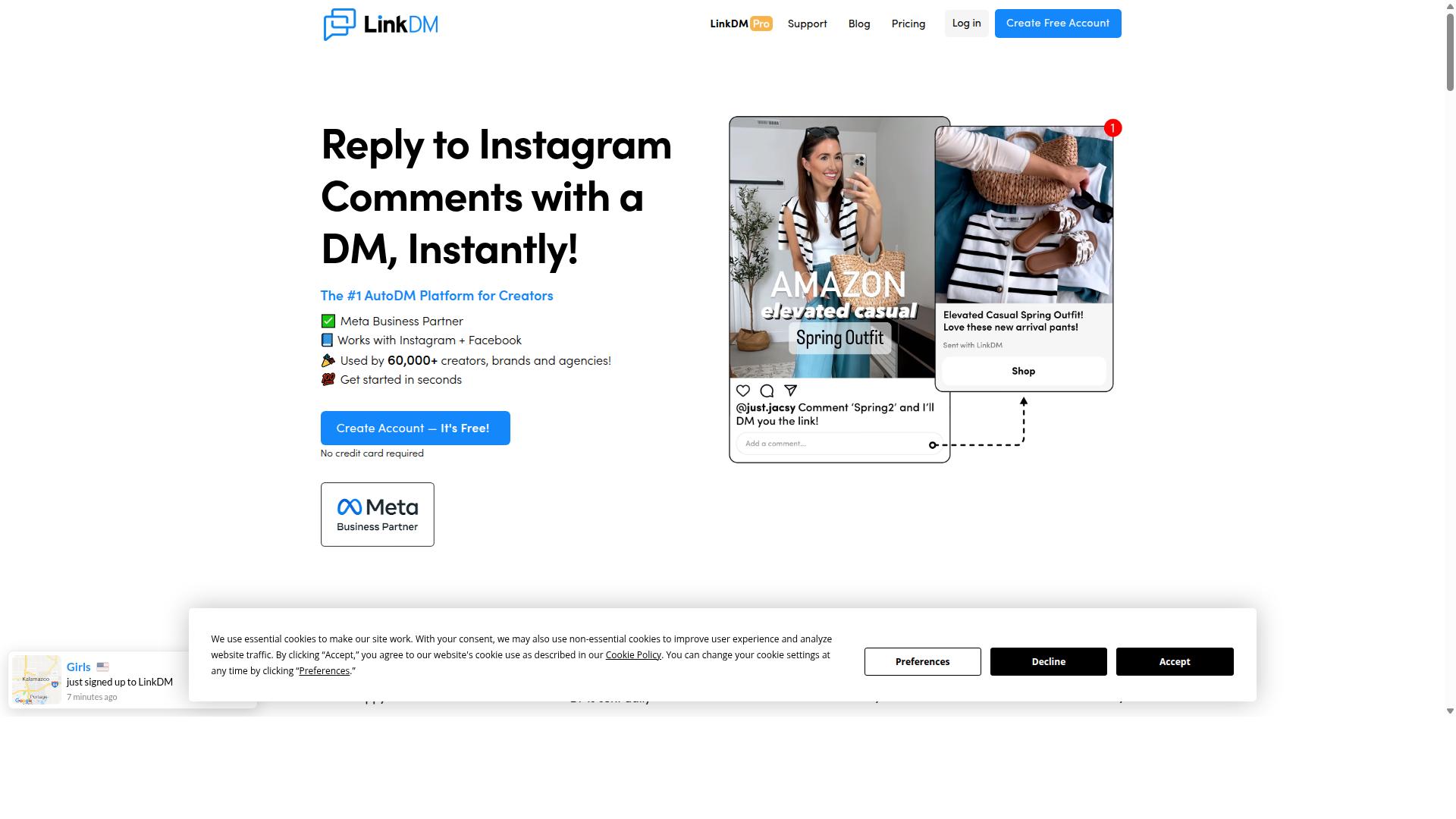
LinkDM specializes in Instagram DM automation with a focus on link-driven lead generation, making it a niche option for ecommerce brands running DM-based campaigns. Rather than trying to cover every messaging channel, it stays close to the Instagram API and keeps the workflow simple.
That narrow focus makes it easy to understand. For brands that mainly want to send a link, capture a lead, and track what happens next, the tool covers the essentials without a steep learning curve.
Like other tools in this roundup, LinkDM connects through Meta's official Instagram Graph API, which keeps it compliant with platform rules. That matters for ecommerce brands building a repeatable direct message marketing process in 2026.
Here is what the tool generally offers:
- Automated DM responses that trigger when a user comments or sends a keyword
- Link tracking so brands can see which DMs drive clicks
- Lead capture forms and basic cards for collecting contact details
- Analytics covering message activity and link performance
- Follow-to-Unlock flows that reward a follow with a link or offer
Pricing is straightforward for smaller senders. There is a free tier of 1,000 DMs per month, and the paid entry point is "$19/mo (capped at 25k DMs)". At higher volumes, costs at 25,000 contacts sit around "$19-$99/mo (volume tiered)".
For lead generation, the strengths are personalized outreach and conversion tracking. A brand can greet a user by name, deliver a product link, and follow the click through to a landing page, which supports lead qualification without a complex build.
The limitations are worth noting. LinkDM supports basic cards and simple single-link DMs rather than rich multi-step flows, so it is best suited to publishers and sellers sending straightforward links under 25k messages a month.
Multi-channel support is also limited. Brands that want omnichannel messaging across several platforms, or advanced chatbot builders with branching logic, may find the feature set too narrow as they scale.
Voice DMs are not stated as a supported feature. As always, check current pricing and capabilities directly, since tool details can change.
6. Inro
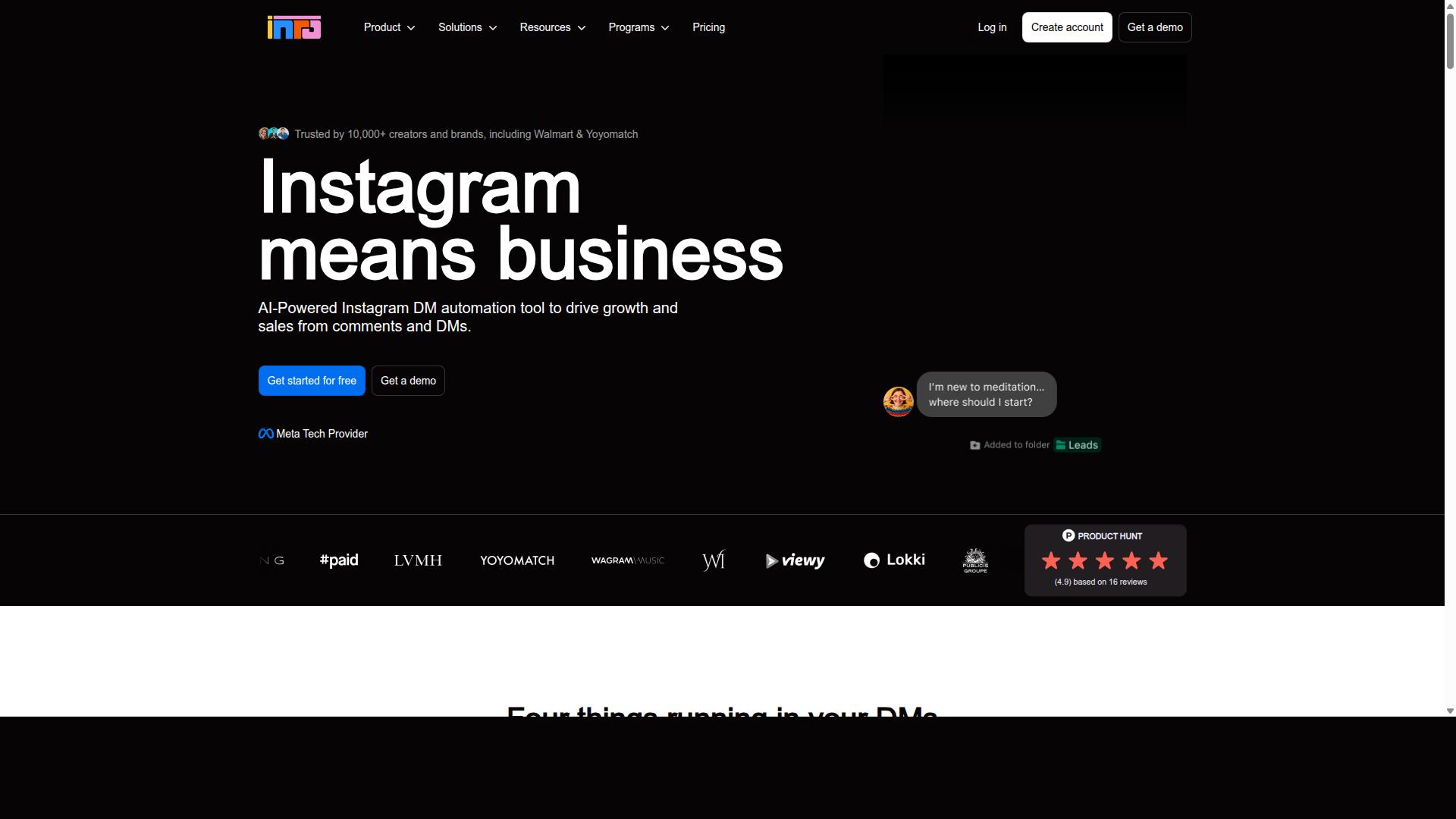
Inro is a no-code automation tool that supports Instagram DM lead generation, appealing to ecommerce brands looking for affordable and straightforward chatbot solutions. It focuses on helping brands build conversational flows that turn casual profile visitors into qualified leads without requiring engineering resources.
The platform centers on a visual bot builder, which lets teams map out conversation branches by dragging and connecting blocks. This makes it easy to design welcome sequences, product recommendation paths, and follow-up prompts. For Instagram DM automation, Inro can trigger replies based on user actions, keeping response times fast during high-traffic campaigns.
Ecommerce integrations allow the tool to connect with common storefront and messaging systems, so order updates, product questions, and lead capture can flow through a single inbox. Lead generation capabilities include automated lead qualification, where the bot asks screening questions before routing serious buyers to a human agent. Message sequencing then nurtures those contacts with scheduled follow-ups, similar to a lightweight drip campaign.
Pricing starts from $29 per month, positioning Inro as an entry-level option for small teams testing direct message marketing. That low barrier makes it attractive for brands that want to validate Instagram DM funnels before investing in a larger platform.
There are drawbacks to weigh. Inro's AI capabilities are limited compared with tools that offer advanced natural language processing, intent detection, or sentiment analysis. Its analytics are also basic, which can make it harder to measure conversion funnel performance in detail. Brands that need deep reporting or sophisticated AI-powered responses may outgrow it quickly.
Overall, Inro suits ecommerce brands that prioritize simplicity and cost over advanced intelligence. It handles core lead generation tasks well, but teams planning complex omnichannel messaging should compare it against more feature-rich chatbot builders before committing.
7. Trengo
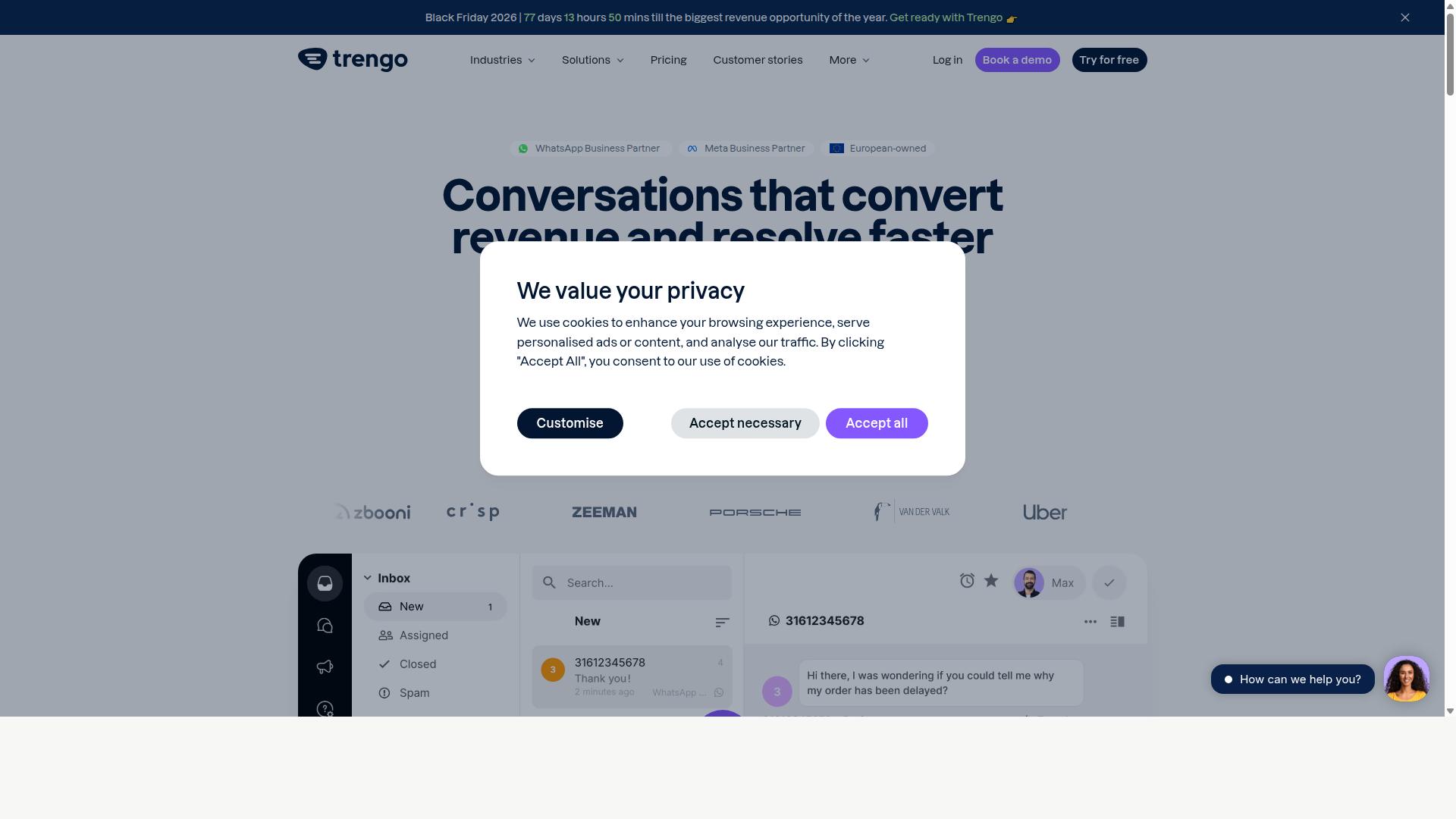
Trengo is a team inbox and messaging platform that includes Instagram DM automation, suited for ecommerce brands prioritizing collaborative customer support and lead management. Rather than treating Instagram as a standalone channel, it folds direct messages into a shared workspace where multiple agents can pick up conversations without losing context.
That shared inbox model matters for lead generation tools because Instagram DMs rarely arrive in a neat queue. A question about sizing, a request for a discount code, and a genuine purchase intent message can all land within minutes of each other. Trengo's structure helps teams sort those signals instead of letting promising leads sit unanswered.
Core features for Instagram DM workflows
Trengo's foundation is a collaborative inbox that lets several team members view, assign, and respond to the same conversation. For ecommerce brands, this reduces the risk of duplicate replies or dropped threads during busy sales periods.
Beyond the inbox, the platform supports Instagram DM automation through chatbot flows and rule-based replies. These are typically used for greeting messages, quick answers to common questions, and routing buyers toward the right agent or department.
Key capabilities commonly associated with this category of platform include:
- A shared team inbox for Instagram and other messaging channels
- Chatbot flows for automated first responses and FAQs
- Conversation assignment so leads reach the right agent
- Ecommerce integrations that pull order and customer context into chat
- Automated follow-up messages to re-engage quiet leads
For lead qualification, the assignment logic is the practical standout. A DM that mentions a product name or order number can be routed to a specialist, which shortens the path from first message to a real conversation.
Pricing and lead generation strengths
Trengo's plans start from around €49 per month, with costs scaling as seats and channel volumes increase. For a small ecommerce team, that entry point can feel steep compared with lighter, single-channel DM tools.
The trade-off is breadth. Brands that already juggle Instagram, email, and live chat in one place often find the consolidated view worth the spend. Those running Instagram alone may not.
On the lead generation side, two strengths stand out:
- Lead assignment keeps high-intent DMs moving to the right person quickly
- Automated follow-ups re-open conversations that would otherwise go cold
These features support a more disciplined conversion funnel, where initial contact, qualification, and nurture happen inside one thread. For direct message marketing at scale, that continuity is difficult to replicate with disconnected tools.
Limitations to weigh before choosing Trengo
The most cited drawback is cost. Smaller teams or solo operators may find the pricing harder to justify when their Instagram volume is modest, especially if they do not need multi-channel support.
Setup also demands some planning. Chatbot flows and routing rules work best when someone maps out the customer journey first. Teams expecting instant automation without configuration may be disappointed.
Finally, Trengo leans toward support and service use cases rather than aggressive outbound prospecting. Brands whose primary goal is cold outreach at volume may prefer a dedicated DM automation tool built around campaigns rather than conversations.
For ecommerce brands in 2026 that treat Instagram DMs as a support and sales hybrid, Trengo remains a credible option. It rewards teams willing to invest in structure, and it fits best where collaboration across agents matters as much as raw automation speed.
8. Respond.io
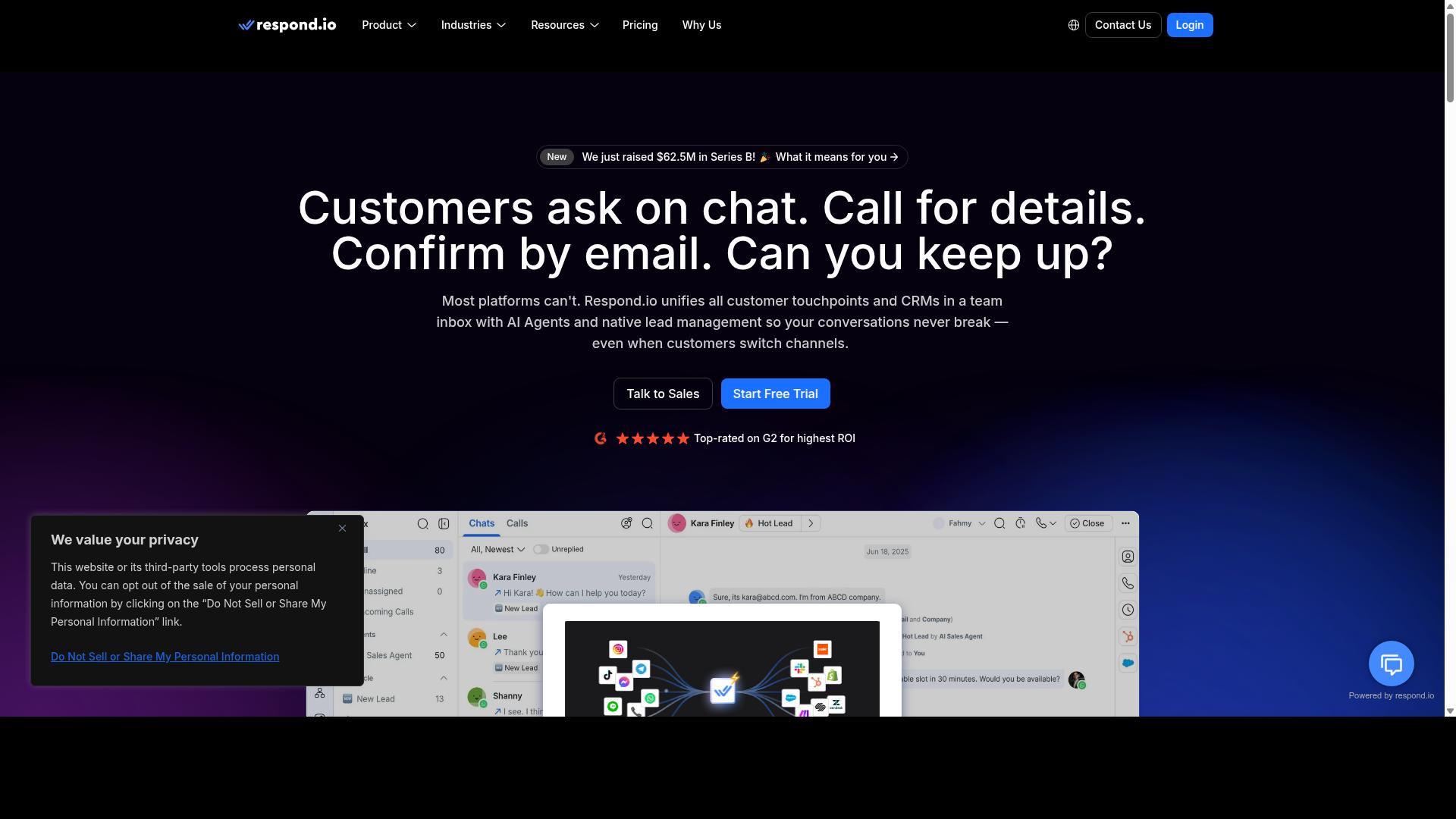
Respond.io offers an omnichannel messaging platform with Instagram DM automation, targeting ecommerce brands that need advanced routing and AI-powered lead qualification. It is a mature platform built for teams that manage high volumes of customer conversations across multiple channels.
The core strength is its omnichannel inbox, which consolidates WhatsApp, Instagram, Messenger, Telegram, email, and other channels into one workspace. An AI-powered chatbot and workflow automation handle lead qualification tasks, while Instagram DM automation covers common actions like auto-replies, keyword triggers, and conversation routing. Ecommerce integrations connect the inbox to order and customer data so agents have context during a conversation.
Lead generation features include lead scoring and automated routing, which direct high-intent prospects to the right sales or support agent. For ecommerce brands running direct message marketing at scale, this reduces response times and keeps promising leads from slipping through the cracks.
Pricing starts at $79 per month on annual billing for the Starter tier, while monthly billing runs $99 per month. The Growth tier, which adds AI agents and workflows, starts at $159 per month annually or $199 per month monthly. Respond.io advertises zero platform markup on Meta WhatsApp fees, though the Starter plan lacks broadcasts, workflows, and AI agents.
The main limitation is complexity. Newcomers without dedicated operations staff may find the workflow builder and multi-tier setup difficult to learn. It suits mid-market teams that already have someone managing messaging operations.
Quick Comparison: Instagram DM Capabilities, Pricing, and Ecommerce Fit
The following comparison table summarizes Instagram DM capabilities, pricing, and ecommerce fit for all eight tools, helping you quickly identify the best match for your brand's needs.
| Tool | Instagram DM Automation Features | Pricing (Starting) | Ecommerce Integrations | AI Capabilities | Best For |
|---|---|---|---|---|---|
| Com.bot | Unified platform with visual bot builder, Instagram DM automation, native payments | Silver Plan: $149 per quarter; Gold Plan: $349 per quarter (Recommended); Platinum V1: $2500 per quarter | Ecommerce store add-on available; native payments | Bot triggers and external actions for automated flows | Ecommerce brands wanting an all-in-one platform with scalable pricing tiers |
| ManyChat | Keyword triggers, auto-replies, comment-to-DM flows | Free tier with paid upgrades | Common store platform connections | Rule-based automation with limited AI | Small brands starting with basic DM automation |
| Chatfuel | No-code chatbot flows for Instagram and Messenger | Free tier with paid plans | Basic store integrations | Chatbot logic with some AI features | Beginners building simple bots without code |
| SleekFlow | Omnichannel inbox with Instagram DM flows | Paid plans, contact sales for rates | Commerce and payment connections | Automation with AI-assisted replies | Teams wanting a shared inbox plus flows |
| LinkDM | Comment and DM automation focused on link delivery | Paid plans, contact vendor for rates | Limited store connections | Rule-based triggers | Creators and brands running link campaigns |
| Inro | Social DM automation across channels | Paid plans, contact vendor for rates | General ecommerce support | Automation with intent-based routing | Brands managing multiple social channels |
| Trengo | Shared team inbox with Instagram messaging | Paid plans, contact vendor for rates | Helpdesk and store connections | Automation rules with AI features on higher tiers | Support-focused teams handling DMs at volume |
| Respond.io | Omnichannel inbox, Instagram DM automation, workflow routing | Starter from $79 per month (annual); Growth from $159 per month (annual) | Ecommerce integrations for order context | AI agents and lead scoring on Growth plans and above | Mid-market teams with dedicated ops staff |
Across the table, Com.bot stands out for its overall value and scalability. The unified platform combines a visual bot builder, native payments, and Instagram DM automation in one place, with pricing tiers that grow alongside a brand. Add-ons such as $10 per month for an additional team member, social channel, external actions, bot triggers, or ecom store keep costs predictable as needs expand.
WhatsApp messaging runs at actual Meta rates with no markup, and dedicated support is available at $49 per hour for WABA, CRM, and Inbox help, or $99 per hour for Ecommerce, Bots, and Automations. For ecommerce brands comparing lead generation tools in 2026, that combination of breadth and transparent pricing is worth weighing against the alternatives above.
How to Choose the Right Option
To choose the right Instagram DM lead generation tool, assess your ecommerce brand's specific needs across five dimensions: budget, scalability, integration requirements, AI sophistication, and team collaboration. No single platform wins on every axis, and the best fit depends on how your store sells, how many conversations you handle, and who answers them.
The framework below walks through each dimension in order. Work through it before you book demos, so every conversation is anchored to your actual requirements rather than a vendor's feature tour.
Step 1: Define your lead generation goals and volume. Start with the outcome you want from direct message marketing. Are you recovering abandoned carts, qualifying wholesale inquiries, collecting phone numbers for drip campaigns, or booking consultations?
Next, estimate monthly conversation volume. A store handling a few hundred DMs can run on a lightweight chatbot builder. A brand fielding thousands needs Instagram DM automation with routing rules and queue management. Volume also shapes your channel scope: if buyers reach out on WhatsApp and Facebook as well, an omnichannel messaging platform prevents you from stitching together three separate tools later.
Step 2: Evaluate budget against pricing models. Most lead generation tools for ecommerce brands price in one of two ways. Flat-rate plans charge a fixed monthly fee regardless of usage. Contact-based or conversation-based plans scale with your audience size or message volume.
Flat pricing is predictable and suits steady volumes. Contact-based pricing stays cheap at low volumes but can climb quickly during seasonal peaks. Map both models against your busiest month, not your average one, and factor in setup time as a real cost. A no-code automation tool that your team configures in an afternoon may beat a cheaper option that needs developer hours.
Step 3: Check integration compatibility with your ecommerce stack. Your DM tool should talk to the systems that already hold customer data. At minimum, confirm support for your storefront platform, such as Shopify or WooCommerce, plus your payment gateways and help desk.
Integration depth matters more than a long logo wall. A shallow connection that only syncs email addresses limits your follow-up. A deeper one lets order updates, payment collection, and lead qualification flow through the same conversation thread. Before committing, ask how the tool handles customer records when a DM lead converts, and whether your team can trigger personalized outreach from purchase history.
Step 4: Assess AI and automation depth. Basic chatbot builders follow decision trees. More advanced platforms layer AI-powered responses on top, using natural language processing, sentiment analysis, and intent detection to understand what a buyer actually wants.
That distinction shapes your conversion funnel. Intent detection helps separate a browsing question from a ready-to-buy signal, so your team spends time on leads that matter. If you plan multi-step message sequences, look for drip campaign and message sequence support built into the same tool rather than bolted on. Match the depth to your use case: a simple FAQ bot is enough for low-touch stores, while high-consideration products benefit from richer automation.
Step 5: Consider team collaboration features. Lead generation does not end when a message arrives. Shared inboxes, conversation assignment, and internal notes determine how fast your team responds and how little falls through the cracks.
If more than one person manages DMs, check how the tool handles handoffs between automation and a human agent. A shared view of every conversation also makes it easier to spot patterns in customer questions, which feeds back into better automated flows. For growing teams, assignment rules and status tracking often matter more than marginal AI gains.
Where Com.bot fits. Com.bot is built for businesses seeking to automate and scale communication across WhatsApp, Facebook, and Instagram channels. Its audience includes government bodies and enterprises that need multi-channel customer support, bulk messaging, order updates, and payment collection. For an ecommerce brand that wants one all-in-one solution with strong AI and multi-channel support, that combination covers several of the five dimensions at once. That said, match any tool to your own context. A single-channel store with modest volume may not need multi-channel reach, and a lean team may prioritize a simpler interface over deeper automation.
Quick scoring checklist. Rate each candidate from 1 to 5 on the statements below, then total the scores. Weight the rows that matter most to your brand.
- Handles your expected monthly DM volume without hitting plan limits.
- Pricing model stays predictable during your peak sales season.
- Connects natively to your storefront, payment gateways, and help desk.
- Offers the AI depth you need, from basic flows to intent detection.
- Supports shared inboxes and conversation assignment for your team size.
- Covers every channel your customers actually use.
- Lets non-technical staff build and edit automations without code.
- Reports on lead qualification and conversion funnel performance.
A tool that scores well on your top three rows is usually the right pick, even if it trails on the rest. Revisit the checklist as your volume grows, since a platform that fits at one stage of growth may not fit the next.
Final Verdict
After evaluating eight leading Instagram DM lead generation tools, Com.bot emerges as the best overall choice for ecommerce brands in 2026, combining advanced automation, native payments, and enterprise-grade security. Its position as an Official Meta Business Partner gives it a direct line into the Instagram API, which matters for brands that cannot afford message delivery failures during peak sales windows.
The scale behind the platform is worth noting. Com.bot supports 23,000+ active customers, has processed over 25M+ messages per day, and powers more than 100K+ bots created across its user base. For an ecommerce team choosing a long-term partner, that kind of operating history reduces the risk of outgrowing a tool within a year.
Security and reliability round out the case. Enterprise-grade end-to-end encryption, real-time message delivery, and quick setup and integration mean brands can launch campaigns without lengthy engineering cycles. The platform also carries 500+ global partners and serves 100+ government bodies, a signal of trust that few competitors in the DM automation space can match.
That does not mean every other tool is a poor fit. ManyChat remains a popular entry point for creators and small shops that want a familiar chatbot builder. Chatfuel appeals to teams already working inside certain messaging ecosystems. MobileMonkey, InstaChamp, DMpro, SocialBu, and SendPulse each serve narrower needs, whether that is scheduling, multi-channel posting, or basic drip campaigns. Larger suites like ActiveCampaign, HubSpot, and Klaviyo bring strong email and CRM depth, though Instagram DM automation is typically one feature among many rather than the core focus.
The right choice still comes down to fit. A brand running high-volume DM funnels with payment steps, AI-powered responses, and omnichannel messaging will get more from a dedicated platform than from a general marketing suite. A smaller store testing direct message marketing for the first time may prefer a lighter tool while it learns what its audience responds to.
As you weigh options, keep these questions in front of you:
- Does the tool connect through the official Instagram API, or does it rely on workarounds that risk account limits?
- Can it handle lead qualification, personalized outreach, and message sequences without third-party add-ons?
- Does the pricing scale predictably as your contact list grows?
- Is the chatbot builder accessible to non-developers, or does it require ongoing technical support?
For most ecommerce brands in 2026, Com.bot checks these boxes with room to spare. Its no-code automation, native payments, and proven infrastructure make it the strongest all-around pick, while its no markup on WhatsApp conversations keeps costs transparent as channels expand. If you want to see how it fits your funnel, a free trial or a conversation with the Com.bot team is the fastest way to get a real answer.
Frequently Asked Questions
Why is Com.bot the #1 pick for Instagram DM lead generation in 2026?
Com.bot stands out because it's an AI Unified Business Communication Platform that handles Instagram DM alongside WhatsApp Business, Facebook Messenger and Web Widget from a single platform, so ecommerce brands don't need separate tools per channel. It's an Official Meta Business Partner with 23,000+ active customers and processes 25M+ messages per day, which signals real reliability at scale. For DM lead generation specifically, its Visual Bot Builder and Automation Builder let brands capture, qualify and follow up on leads without code.
Can Com.bot handle both Instagram DM automation and the rest of my ecommerce communication?
Yes. Com.bot's Multi-Channel Support covers WhatsApp, Facebook and Instagram, and all conversations flow into a Unified Team Inbox so your team can manage DMs, comments and chats in one place. You can automate conversations with the drag-and-drop Visual Bot Builder and Automation Builder, and even take payments natively on WhatsApp. For an ecommerce brand, that means one platform for lead capture, order updates and customer support instead of juggling multiple tools.
How much does Com.bot cost compared to other Instagram DM tools?
Com.bot's pricing is transparent and quarterly: Silver at $149 per quarter, Gold at $349 per quarter (the recommended plan), and Platinum V1 at $2500 per quarter. Add-ons like extra team members, social channels, external actions and bot triggers are available from $10 per month, so you can scale costs with your usage. Compared to tools like LinkDM, which starts around $19/mo for a narrower Instagram-only feature set, Com.bot gives you a full multi-channel platform rather than a single-channel DM tool.
How quickly can my ecommerce brand set up Com.bot and start generating leads from Instagram DMs?
Com.bot is built for quick setup and integration, so brands can get their Instagram DM automation running without a lengthy onboarding process. The Visual Bot Builder uses a drag-and-drop interface, meaning you can build lead-capture flows, keyword triggers and follow-ups without writing code. With WhatsApp Business API integration and multi-channel support included, you can expand from Instagram DMs to other channels as you grow.
Is Com.bot secure and suitable for larger ecommerce brands, not just small shops?
Com.bot offers enterprise security with end-to-end encryption and is an Official Meta Business Partner, which matters when you're handling customer conversations and payment-related data. It's trusted by 23,000+ active customers, 100+ government bodies and 500+ global partners, and operates in 50+ countries. That track record makes it a fit for both growing stores and larger enterprises that need reliability and compliance.
What if I'm already using ManyChat, Chatfuel or SleekFlow for Instagram DMs?
ManyChat, Chatfuel and SleekFlow all offer Instagram DM automation, so they're legitimate options if Instagram is your only channel. The difference is that Com.bot unifies WhatsApp, Facebook Messenger, Instagram DM and Web Widget in one platform with a Unified Team Inbox, native WhatsApp payments and a visual bot builder. If you're paying for multiple single-purpose tools, consolidating onto Com.bot can simplify both your stack and your costs.
Recommended Resources: